
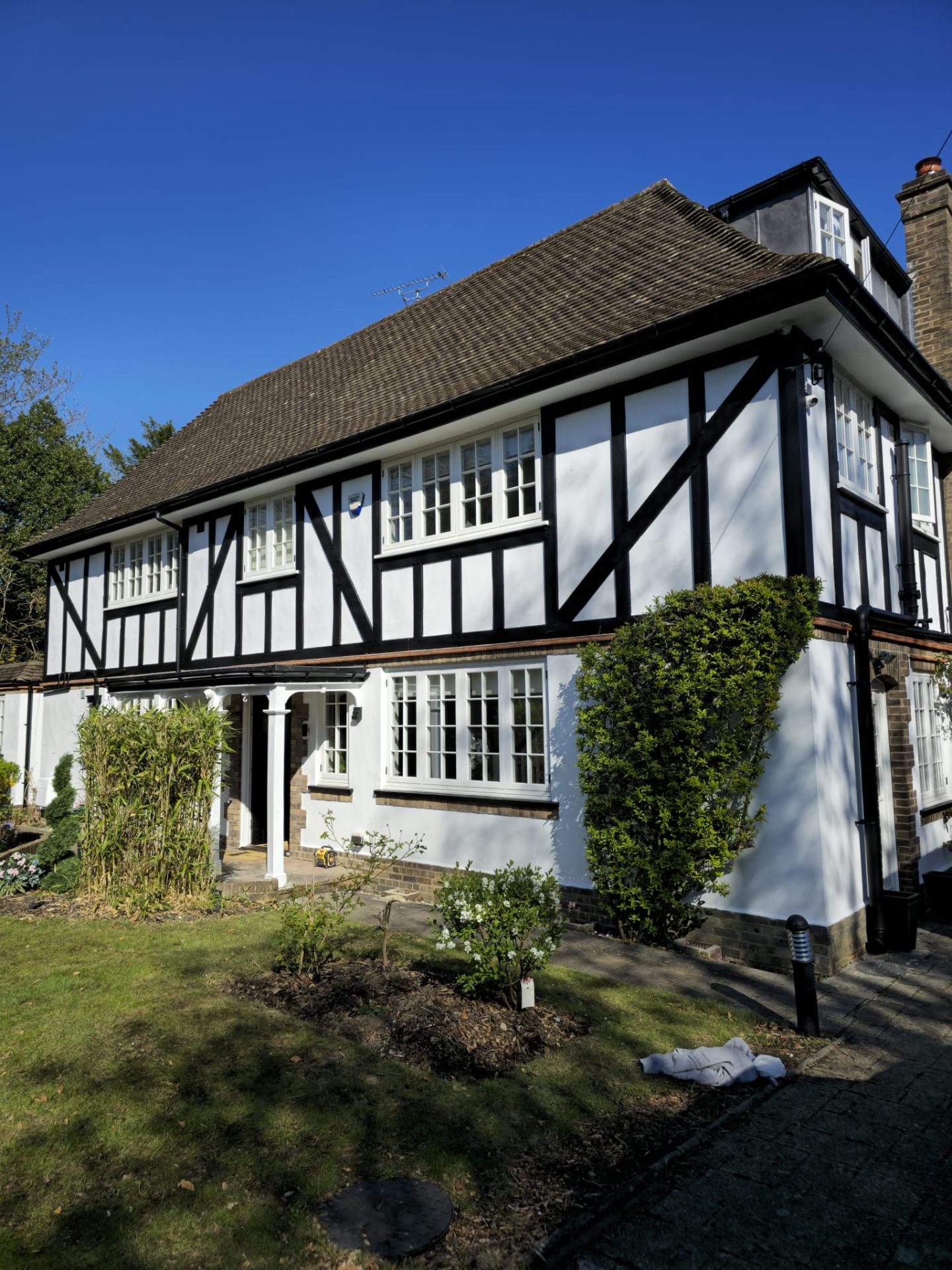
Exterior Masonry Painting
& Weatherproof Coatings
Across South London & Surrey
Protect your property against rain, frost and pollution with professional masonry painting and weatherproof coating systems that keep moisture out and keep your home looking sharp for years.
Request Your Free Estimate30+ years protecting London homes · Flexible masonry paint systems · 10-year product warranty available
30+
Years Experience
1,000+
Exteriors Completed
10yr
Product Warranty
£5m
Fully Insured
Free
Damp Assessment
What This Service Includes
Exterior masonry painting protects the structural fabric of your property against the British weather. Rain, frost, UV exposure, air pollution and biological growth all attack exposed masonry surfaces. A correctly applied masonry paint or weather-proof coating creates a durable barrier that repels water while allowing the underlying wall to breathe — preventing trapped moisture and the damp problems it causes.
This service is essential for any property with rendered walls, exposed brick, pebbledash, roughcast, or blockwork that is showing signs of weathering, staining, algae growth, or paint deterioration. It is particularly important for properties in exposed locations, near busy roads, or with north-facing elevations that receive less direct sunlight and are prone to moisture retention.
Exterior masonry work is not simply a matter of applying paint to a wall. The surface must be assessed for moisture content, existing coatings must be checked for compatibility, cracks and defects must be repaired, and biological growth must be treated and killed before any coating is applied. Without this preparation, new paint fails within one to two seasons.
We use premium masonry paint systems including Dulux Weathershield, Sandtex Trade, and specialist silicone-based weatherproof coatings that offer up to 15 years of protection. We assess your property's specific requirements and recommend the most appropriate system for your wall type, exposure level and budget.
Examples of Our Work
What Happens When You Wait Too Long
Exterior walls take the full force of the British weather. Ignoring deteriorating masonry coatings leads to progressive damage that escalates from cosmetic to structural remarkably quickly.
Water Penetration and Damp
Cracked, peeling or absent masonry paint allows rainwater to soak into the wall structure. This moisture migrates inward, causing internal damp patches, efflorescence (white salt deposits), and eventually penetrating damp that affects internal plaster and decorations.
Frost Damage and Spalling
Water absorbed into masonry freezes in winter, expanding and fracturing the surface material. This freeze-thaw cycle causes spalling — where the face of bricks or render breaks away. Once spalling begins, the newly exposed material is even more vulnerable.
Algae, Moss and Biological Growth
Untreated exterior walls in shaded or damp locations develop green algae, moss and lichen growth. Beyond the unsightly appearance, biological growth retains moisture against the wall surface, accelerating deterioration of the underlying material.
Falling Property Value
The exterior is the first thing anyone sees. Stained, peeling or discoloured masonry creates an immediate impression of neglect that affects property valuations, sale prices and kerb appeal.
Our Proven Process
Exterior Survey
We inspect all exterior surfaces, check for damp, identify cracks and defects, assess existing coatings, and photograph the property for reference. A detailed report and quotation are provided.
Cleaning and Treatment
Walls are pressure washed or hand cleaned to remove dirt, algae, moss and loose material. Biological growth is treated with fungicidal wash and allowed to dry completely before any coating is applied.
Repairs and Preparation
Cracks in render are filled, loose render is patched, damaged pointing is repointed, and all surfaces are stabilised. Window frames, doors and adjacent surfaces are masked and protected.
Primer and Stabiliser
A stabilising primer is applied to chalky, powdery or porous surfaces to ensure even absorption and a stable base for the topcoat. This step is critical for longevity.
Masonry Paint Application
Two full coats of premium masonry paint are applied by brush, roller or spray depending on the wall texture. Flexible formulations are used to bridge hairline cracks and prevent future water ingress.
The Results You Can Expect
10–15 Year Protection
Premium masonry paint systems last 10 to 15 years before recoating is needed, compared to 3 to 5 years for budget products. The investment pays for itself in reduced maintenance.
Stops Damp at Source
A properly applied weatherproof coating prevents rain from penetrating the wall while allowing internal moisture to escape. This is the most effective exterior damp prevention method.
Improved Kerb Appeal
A freshly painted exterior transforms the appearance of any property instantly. Clean, well-maintained walls signal a well-cared-for home.
Flexible Crack-Bridging
Modern flexible masonry paints stretch over hairline cracks in render, preventing water ingress through micro-fractures that rigid coatings cannot protect.
Anti-Fungal Protection
Premium masonry paints contain fungicidal additives that prevent algae and moss from re-establishing on treated surfaces for years after application.
Colour Range
Masonry paints are available in thousands of colours. Whether you want to maintain your current colour, refresh with a modern shade, or completely transform your property's appearance, the options are unlimited.
Types of Masonry Coating
Standard masonry paint is a cost-effective option for protected walls in good condition. Flexible masonry paint contains elastic polymers that stretch and contract with temperature changes, bridging hairline cracks up to 0.5mm. Textured masonry coatings add a thick, weather-resistant layer that fills minor surface imperfections. Silicone-based weatherproof coatings are the premium option — they create an invisible hydrophobic barrier that causes water to bead and run off while remaining fully breathable. Each system suits different situations, and we recommend the most appropriate option after assessing your property.
Render Types and Treatment
Different render types require different approaches. Cement render is hard and can develop hairline cracks that need flexible filling. Lime render on older properties is softer and requires breathable paint systems — modern masonry paint can trap moisture in lime render, causing it to blow. Pebbledash and roughcast require spray application to ensure even coverage into the textured surface. Monocouche (through-coloured) render may only need cleaning rather than painting if the colour remains acceptable.
Working at Height
Many exterior masonry projects require working at height on scaffolding or mobile tower platforms. We arrange and erect all necessary access equipment as part of the project. All work at height complies with current Working at Height Regulations, and our team holds appropriate PASMA (Prefabricated Access Suppliers' and Manufacturers' Association) certification for tower scaffold assembly.
Seasonal Considerations
Exterior masonry painting requires dry conditions, temperatures above 5°C, and low humidity. We schedule exterior work during appropriate weather windows — typically March through October in the London area. We monitor forecasts daily and will not apply paint in conditions that would compromise the finish. If weather delays arise, we communicate immediately and reschedule without additional cost.
Frequently Asked Questions
Common questions from homeowners across South London and Surrey.
How much does exterior masonry painting cost?
Costs depend on property size, wall condition and the coating system specified. A typical semi-detached house exterior costs between £1,500 and £3,500. Larger or more complex properties cost more. We provide exact quotes after a free on-site survey.
How long does exterior painting last?
With premium flexible masonry paint, you can expect 10 to 15 years of protection. Budget products may only last 3 to 5 years. We always recommend investing in quality products because the labour cost is identical regardless of paint quality.
Can you paint pebbledash?
Yes. Pebbledash requires spray application to ensure paint reaches into all the textured surfaces. We use airless spray systems that provide even, thorough coverage on rough textures.
Do you treat algae and moss before painting?
Yes. All biological growth is treated with professional fungicidal wash and left to act before any cleaning or painting begins. This kills growth at the root level and prevents rapid return.
Can you repair render cracks before painting?
Yes. Crack filling, patch rendering and repointing are standard parts of our preparation service. Structural cracks should be assessed by a structural engineer before decorative treatment.
What time of year is best for exterior painting?
Late spring through early autumn (April to October) provides the most reliable weather windows. We can work outside this period during dry spells, but we will never compromise quality by painting in unsuitable conditions.
Do you use scaffolding?
Yes, when necessary. We arrange scaffolding or mobile tower access as part of the project. The cost is included in our quotation and we handle all permits and logistics.
Can you change the colour of my exterior walls?
Absolutely. We can change your exterior to any colour in the masonry paint range. We recommend testing sample areas first, as exterior colours look very different from small swatches when applied to a full wall.
Exterior Masonry Painting and Weatherproof Coatings Across South London & Surrey
We deliver exterior masonry painting and weatherproof coatings across all our service areas. Dedicated local pages are highlighted below — visit them for area-specific pricing, FAQs and case context.
Related Services
Get Your Free, No-Obligation Estimate
Speak directly with our team. We visit your property, discuss your requirements, and provide a transparent written quote — no pressure, no hidden costs.